Business & work
A sterilization log for dentists
Digital sterilizer-cycle log replacing paper clipboards in dental clinics, used by about 90 dentists.
This week someone who says they don't know what React is shipped an app that 90 dentists use every day. A non-programmer built an ERP for a construction company and went live the next morning. And the most upvoted build of the week was a wallpaper that politely moves out of the way of your desktop icons.
Also on the radar: a globe a dad built for his two boys, forty mini PCs lashed together with USB cables, and a horror game where a stranger texts you for help.
The lead story is about who's building now. Further down: a webcam that gives you an X-ray, an AI agent that phoned a restaurant to order dinner, three separate ways to run models bigger than your RAM, and an agent that has to pay its own API bills (it is not going well).
The most-discussed business build this week came from someone who opened with "I don't know what React is." They built a digital log for dental sterilization cycles, replacing paper clipboards, and about 90 dentists use it every day. 533 people weighed in, most of them asking how.
They weren't alone. A self-described non-programmer built an ERP with ChatGPT for an industrial construction company and was going live the next day. A small PDF editing and signing tool, first used at its founders' own construction company, picked up 80 users in 24 hours. Someone used Claude to organize a legal database into a public archive of 300,000 searchable military-law documents. And a tool now turns a Google Maps business listing into a full website in under a minute.
None of these are developer toys. They're boring, useful software for dentists, contractors and small businesses, built by the people who need them. That's the shift worth watching.
Digital sterilizer-cycle log replacing paper clipboards in dental clinics, used by about 90 dentists.
ERP system built with ChatGPT for an industrial construction company's operations, going live at work.
PDF editor and signing tool first used at the founders' construction company.

Public archive of 300,000 searchable military-law documents organized with Claude for a nonprofit.

Turns a Google Maps business listing into a full website in under a minute.
Four pairs of builders who have never met. Each build is good alone. Bolt two together and you get something nobody has shipped yet. Consider this the introduction.
One builder made a tiny Windows taskbar widget that shows your Claude five-hour and weekly usage. Another built Prefixwise, an MIT-licensed proxy that explains why your Claude Code, Codex or agent calls miss the prompt cache, and what each miss costs.
How it fits: The widget shows you're burning through your limit; Prefixwise shows why. Together they'd turn "I'm out of tokens again" into a fix.
sand3d is 3D modeling in Python, designed for language models to write. vork is a headless 3D and visual-effects engine built for agents, in research preview.
How it fits: sand3d's models fed straight into vork, so an agent can build the scene and render the shot without a human touching a 3D tool.
Zammoth is a native Mac recording studio where Claude can run the whole session. LyricalStudio is a music player that turns lyrics into kinetic typography, synced word by word.
How it fits: Finish a track in Zammoth, hand the lyrics and audio to LyricalStudio, and the lyric video comes out the other side.
One builder learns languages by writing with Claude as a tutor. Another got tired of forgetting what they read and built a cross-device app for remembering it, as an alternative to Anki.
How it fits: The tutor's corrections turned into review cards, so this week's mistakes are next week's flashcards.
Two ways to watch your agent work, three ways to run a model bigger than your RAM, two paint apps that hand the AI the brush. Same problem, different garages.
One builder made a Claude Code add-on that draws a live map of what the agent is doing, in a pane beside the chat. Another built a pixel-art office where you can watch your Claude Code agents work, wait and nap.
If they talked: Same itch, one serious and one charming. The live map's data would make the office far more than decoration.
Banach runs trillion-parameter models on a 64GB desktop by streaming the weights. BigMoeOnEdge places model weights so phones and laptops can run models larger than their memory. RustingStrata runs a 249GB model on a single 12GB graphics card, in pure Rust.
If they talked: Three builders attacking the same wall from different sides. Comparing notes on which weights to load when would help all three.
Klad is a paint app your coding agent can drive. PeerBrush is an open-source image editor where you and an AI agent work on the same layered canvas.
If they talked: One is built for agents to drive, the other for humans and agents to share. A common way for agents to talk to a canvas would serve both.

Lets command-line agents take on tasks in the background and see them through, only pinging you with a card when they're unsure. 4,600 stars and 843 comments.
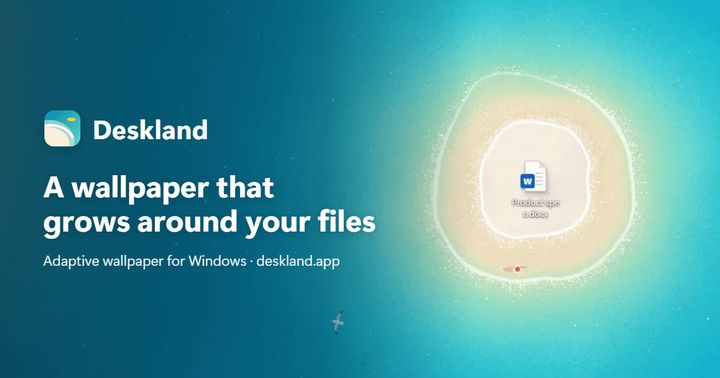
A desktop wallpaper that rearranges itself around your icons so they're always readable. The most upvoted build of the week, by a mile: 7,762.
Point your webcam at your face and see a skull, brain and facial muscles overlaid on it, like an X-ray mirror. Built with Claude.
A sailing simulator where the frontier AI models race each other. 3,000 upvotes from people who wanted to know who won.
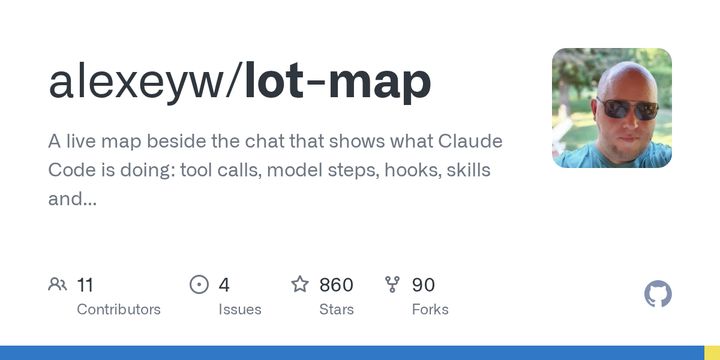
A Claude Code add-on that draws a live map of what the agent is doing, right beside the chat.
Six builders from last issue who came back with news. The Opus-nerf watch hit day 47, the tiny kanban board learned to follow you between machines, and the Codex reset alerts started keeping score.
Day 47 of asking whether Opus 5.5 got quietly worse. Still testing, still posting, and 444 people showed up for the update.
Last issue: Ongoing test tracking whether model performance silently degrades; Opus 5.5 shows none.
It started as a text when your Codex limits reset. Now it keeps score: this week marked the second-longest drought between reset announcements in six months.
Last issue: Text alert service for Codex usage resets, with 30 day update.
The tiny kanban board for you and your coding agents now follows you across every machine. Still a 4 MB binary.
Last issue: Tiny self-hosted kanban board shared by you and coding agents.
Now a drop-in retriever for LangChain and LangGraph that hands the model only the tables it needs. The builder says it cuts schema tokens by about 91%.
Last issue: Open-source schema selection that tops the BIRD Mini-Dev text-to-SQL leaderboard.
Last issue it was a canvas for coding agents. Now it's a desktop app: design with AI, then fix it with your mouse.
Last issue: Visual canvas for working with coding agents.
The open-source assistant that reads your mail and Slack and keeps your to-do list now runs on Mistral.
Last issue: Open-source agent reading inbox, Slack and chats that prepares replies for approval.
752 builds, 381 audiences. Developers building for developers, sure. The good stuff is down the long tail: birders, DJs, long-distance couples, two kids sharing one iPad. Tap one and the Explorer serves up everything made for them.
Appetizers before the main course. Each of these was the biggest thing in its own corner of the internet and never came close to the front page. Hardly an upvote between them, but the comment threads ran long. A stranger who stops to argue is worth ten who scroll past.

A turn-based space empire game, out on Steam after 3,100 Claude Code commits.
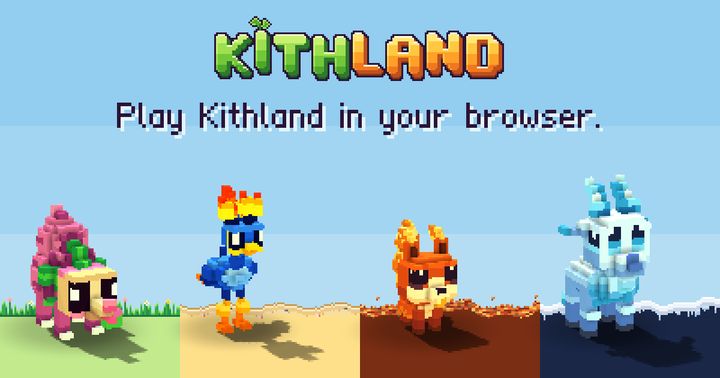
A monster-taming RPG in your browser, about thirty hours long, built across 590 Claude Code sessions.
A horror game where a girl texts you for help and you can type anything back.

A personal website for an orange cat, built in five minutes. Cusco now has a better web presence than most plumbers.
A document scanner with no subscription that keeps your documents on your phone.

An open-source CRM that Claude and ChatGPT can read and update directly.
One codebase for web, Mac and iPhone. A tool that explains your own vibe-coded app back to you. And a spreadsheet where every cell is a coding agent.
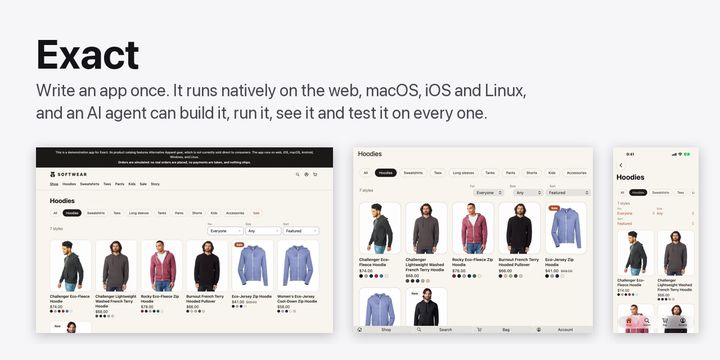
Write an app once and it runs natively on the web, macOS and iOS. 3,182 stars.
Sketchy visually explains what your vibe-coded app actually does, so you can understand your own code again.
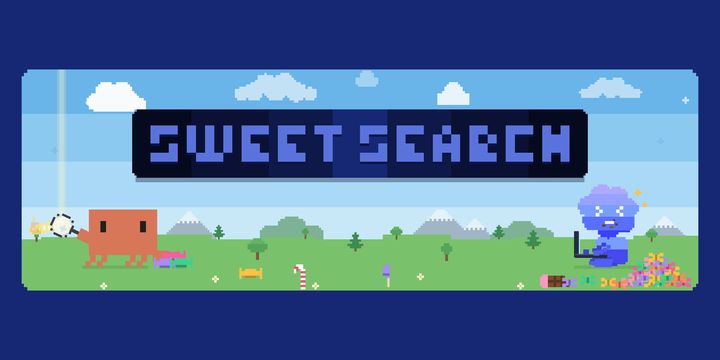
A local code search tool that cuts the token bill for agents like Claude Code and Codex by 5 to 33 percent.
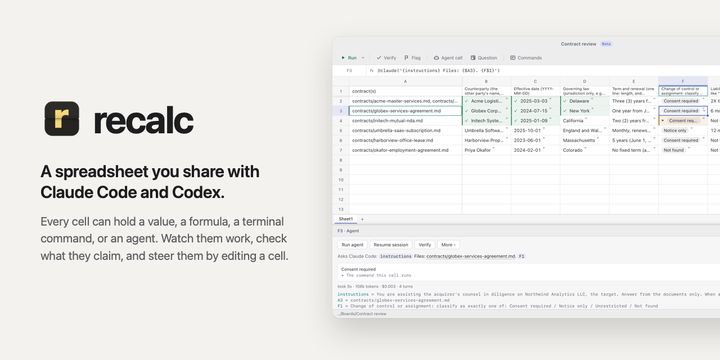
A spreadsheet where each cell can be a Claude Code or Codex terminal, built for evals and benchmarks. Posted in nine places.
Beyond the dentists: meeting notes that never leave your laptop, 58,000 layoff notices in one search box, and an SEO tool with 64 paying customers.
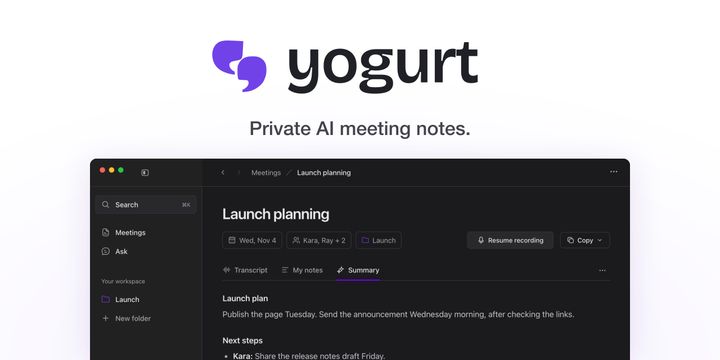
A free, private, open-source alternative to Granola for meeting notes, running on your own machine.

A tool that finds and fixes SEO problems on websites. Four months in: 3,282 users, 64 paying.
58,000 US layoff notices in one searchable database, to spot patterns before the headlines do.
A self-hosted n8n pipeline that goes from news to AI drafts to a Telegram approval to posted social content.
An alarm clock with a 24-hour dial, your whole life drawn in weeks, and an app built to make a four-year-old hand the phone back.

An iPhone alarm clock with a 24-hour dial instead of an endless scrolling list.
Your life visualized in weeks, built by someone statistically halfway through theirs, for everyone else who is too.

A flight and hotel price tracker that Claude can query directly. 24,000 users in five weeks.
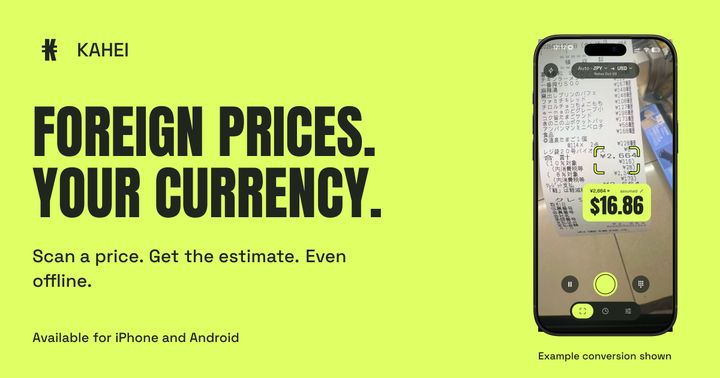
Point your phone camera at a price abroad and see it in your currency, even offline.

An iPhone app designed to give a four-year-old a good reason to hand the phone back.
The desktop got fun again: fish swimming behind your windows, wallpaper that reacts to the room, and a pop-up book three models built in eleven minutes.
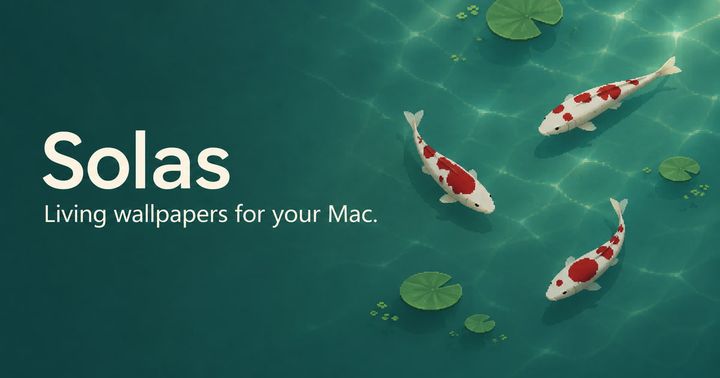
A Mac app that turns your desktop into a living pond, with fish swimming behind your windows.
A live wallpaper engine that reacts to what's happening around you.
A 3D pop-up book film, built in 11 minutes by three copies of a local model working under one orchestrator.
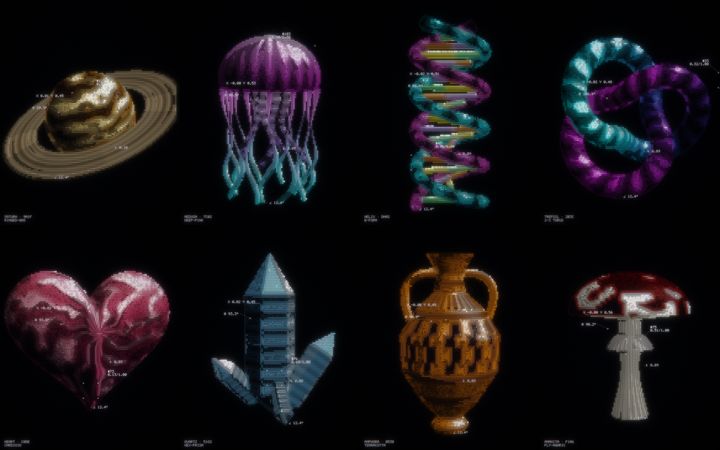
Turn any picture into glowing ASCII-character art that grows in as you watch.
Hacker News's most-recommended YouTube videos, playing as 24/7 TV channels.
An architect's floor-plan game on Steam, a Backrooms even its builder can't predict, and a racing sim in a browser tab.

A trained architect's dream game, now on Steam: accurate floor planning in real-time 3D.
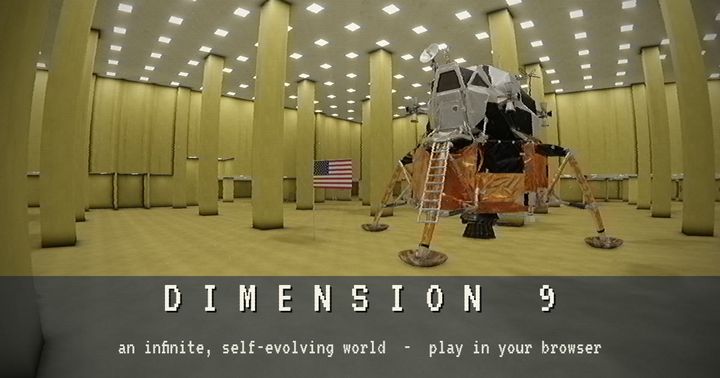
An infinite Backrooms game whose levels Opus generates as you go. Even the builder doesn't know what's next.
A Moebius-inspired adventure game, one month in, built with AI.
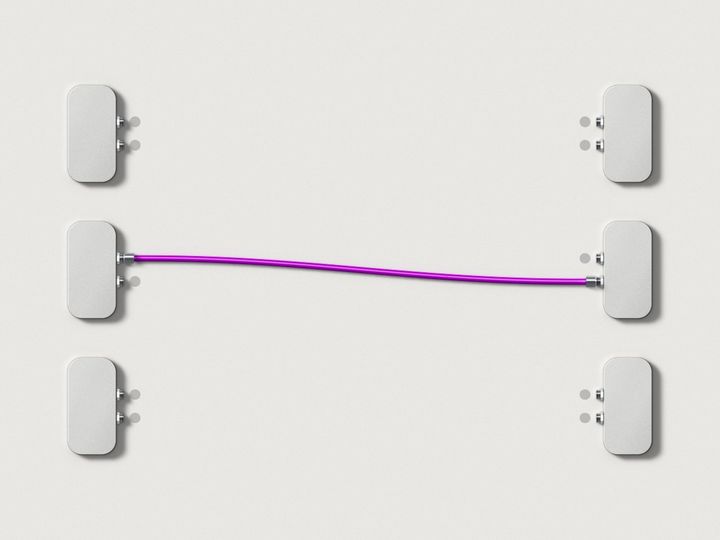
A browser playground of tactile controls: pull cables between jacks, turn knobs, flip switches.
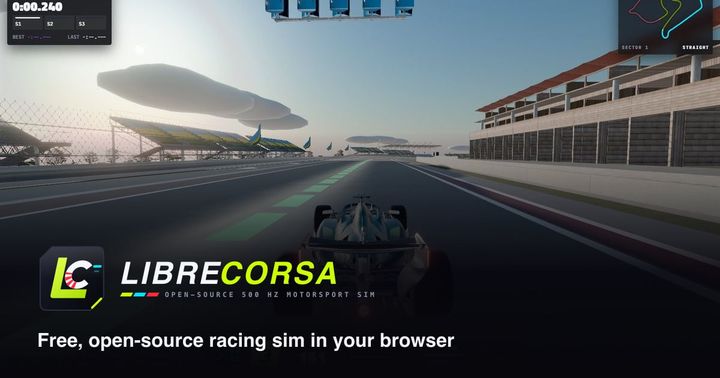
A free, open-source racing sim that runs in a browser tab.
A globe a dad built for his two boys, a history podcast you can interrupt, and one possible new planet.

A 3D globe a dad built with Claude Code for his two boys. It got far more love than he expected.

A history podcast you can interrupt to ask about anything it mentions.
An update on a possible planet that someone found by analyzing telescope data with Claude Code.
Interactive notes that explain RLHF, attention, LoRA and how AI models are evaluated.
Forty mini PCs on USB cables, a honeycomb wall of graphics cards, and a 15 MB Netflix for your home server.

A 15 MB, Netflix-style front end for home media servers, built with Claude. Now open source and posted all over Reddit.
Forty mini PCs linked over USB 3, running a big open model together.
Two pro graphics cards running a 284-billion-parameter model fully offline.
A honeycomb wall of graphics cards built for running AI models at home.
Every satellite that flew over your house, with the photos it took. Also: mechanical keyboard clicks on demand.

See every satellite that passed over your location, with the actual images they took.

A free, open-source app that plays real mechanical keyboard sounds as you type.

A simple firewall that only blocks outgoing connections from the software you install.